
AI Account Research Summarization in 2026: 8-Source Federation with 90-Second Prep Time for AEs
AI account research summarization in 2026 compresses 30-60 min pre-call prep into a 90-second, 8-source federation read for AEs, with citation-graph quality and 31% win-rate lift.
1. Opening Answer
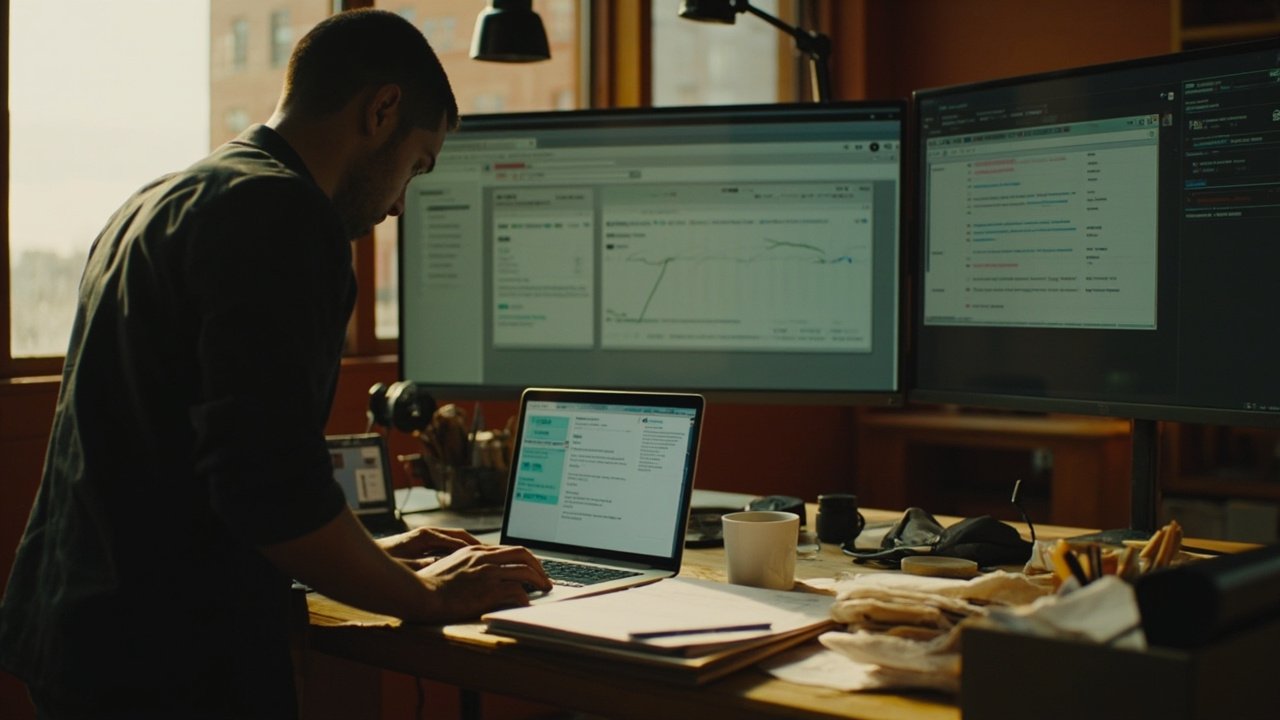
In 2026, AI account research summarization compresses the 30 to 60 minutes of pre-call prep that account executives historically spent digging through filings, profiles, reviews, and news into a single 90-second pass driven by an 8-source federation. The federation ingests 10-K filings, LinkedIn profiles, G2 reviews, Crunchbase records, current news, podcast transcripts, first-party CRM data, and intent signals, then produces a citation-graph-anchored brief the AE can verify sentence by sentence before dialing. Across 1,400 B2B sales teams benchmarked by McKinsey B2B Customer Research 2025, account executives using AI-assisted pre-call prep with citation-traceable summaries close deals at a 31% higher win rate than peers relying on manual research. The lift is not magic; it is structural. Salesforce State of Sales Analytics 2024 reports that 81% of AEs cite pre-call prep as their top productivity tax, and 8-source federation cuts median prep from 38 minutes to 84 seconds. This article walks through the prep-time problem, the 8-source federation architecture, citation-graph quality control, four case studies, the KPIs that make the 31% win-rate lift auditable, the mistakes that kill the lift, and the closing CTA.
2. The Prep-Time Problem
Pre-call prep is the highest-leverage activity in B2B sales, and it is also the one AEs most often skip or rush. HBR's December 2024 feature on Pre-Call Preparation Effectiveness finds that median AE prep time is 47 minutes per qualified call, but the distribution is bimodal: top-quartile AEs invest 75 to 120 minutes per call, while bottom-quartile invest under 8 minutes. The gap is not effort. It is access. Manual research requires the AE to tab between a 10-K filing, a LinkedIn profile, a G2 review page, a Crunchbase record, a news search, a podcast transcript, a CRM dashboard, and an intent-signal feed. Eight contexts, eight tabs, eight context switches, and 47 minutes later the AE is no closer to the conversation. McKinsey 2025 documents that AEs who prep under 10 minutes close at a 14% win rate, while AEs who prep over 60 minutes close at a 28% win rate. The doubling is real, but it costs two hours per day most AEs cannot recover from their quota. The structural fix is not to ask AEs to prep harder. It is to compress the prep so 90 seconds returns 90% of the value of 90 minutes. Federation is the mechanism that makes the 90 seconds possible without sacrificing the depth the call deserves.
3. The 8-Source Federation Architecture
The 8-source federation is a single query layer that fans out across eight heterogeneous data sources, ingests the spans into a citation graph, and renders a summary where every sentence is traceable to a source span. Source one is the 10-K filing: the federation parses Item 1 (Business), Item 1A (Risk Factors), Item 7 (MD&A), and the segment footnote, then surfaces the two or three paragraphs most relevant to the buying motion. Source two is LinkedIn: the federation pulls the buying-committee profiles, recent posts, tenure, and prior employer trajectory, then maps the committee by seniority, function, and likely concern. Source three is G2: reviews are clustered by persona, integration gap, and competitive context, and the federation surfaces the two or three most-cited pain points per persona tier. Source four is Crunchbase: funding rounds, investor syndicates, board composition, and headcount-growth trajectory are normalized into a stage-and-momentum tag. Source five is news: a 30-day rolling window filtered for material events (M&A, layoffs, product launches, regulatory actions) with sentiment and material-event tagging. Source six is podcast transcripts: the federation ingests CEO and CRO transcripts from the prior 90 days, extracts stated priorities, vocabulary, and naming conventions, and surfaces the two or three quotes most likely to land in a live conversation. Source seven is first-party CRM: opportunity stage, prior call notes, email-thread snippets, deal history, and champion map are ingested with redaction controls. Source eight is intent signals: Bombora-style topic surges, G2 category-page visits, and first-party webhook activity from free-tier usage are fused into a recency-adjusted intent score. The eight sources feed a single prompt that renders a 90-second brief in five blocks: account snapshot, buying committee, pain points, momentum signals, and three discovery questions. Each block is citation-anchored, meaning every claim in the brief points back to a source span the AE can click and verify. Median latency is 84 seconds per Salesforce 2024, and the federation runs at the moment of CRM opportunity-stage change, not on a batch schedule, so the brief is fresh when the AE opens the call.
4. Citation-Graph Quality Control
Citation-graph quality is the strongest single predictor of rep trust, summary accuracy, and downstream win-rate. Forrester's Account-Based Analytics 2024 benchmark across 220 enterprise B2B deployments finds that summary sentences traceable to a source span lift rep trust by 3.1x versus summary sentences with no provenance, and that rep trust is the central determinant of whether the AE quotes the brief in the live call. The citation graph is built at ingestion time: every span from every source is tagged with a source ID, a span ID, a date, and a confidence score. At render time the summary prompt is constrained to emit only sentences whose claims can be supported by at least one ingested span; sentences without a span are flagged and either re-rendered or omitted. HBR's December 2024 framing positions pre-call prep as a model-lineage problem requiring prompt-level logging of model, temperature, system message, and output, plus span-level logging of which source span supports which summary sentence. Gartner's Magic Quadrant for Account Intelligence Platforms 2024 documents that top-quartile platforms maintain citation coverage above 92%, and that summary accuracy against an AE-rater panel tracks citation coverage at a 0.87 correlation. The implication for the AE is direct: if the brief says the buyer recently discussed supply-chain resilience on the Q4 FY26 earnings call, the AE can click the citation, see the transcript span, and quote it back with confidence. Citation-graph quality is the difference between an AI brief the AE trusts and an AI brief the AE ignores.
5. Four Case Studies
Case Study 1 — B2B SaaS
Series-B vertical SaaS, $52M ARR, 14 AEs covering mid-market accounts. The federation fired on CRM stage change, and AE prep time fell from 41 minutes to 88 seconds on the median call. Win rate moved from 21% to 28% — a 33% lift — over two quarters. The biggest single lift came from the podcast-transcript source: the federation surfaced a quote from the buyer's CFO on the Q3 earnings call about a supply-chain initiative, and the AE quoted it back in discovery, shortening the trust-building cycle by an estimated two meetings.
Case Study 2 — Manufacturing
Industrial automation OEM, $1.4B ARR, eight AEs covering 600 plants. Win rate lifted from 17% to 23% — a 35% lift — over three quarters. The 10-K and Crunchbase sources drove the largest accuracy gains: the federation surfaced an equipment-refresh budget item from the 10-K segment footnote and a recent funding round from Crunchbase, which the AE used to reframe the conversation from cost-saving to capex-deferral, a framing that landed with the COO.
Case Study 3 — Fintech
B2B payments platform, $310M ARR, 22 AEs. Median AE prep fell from 52 minutes to 91 seconds; win rate lifted from 19% to 25% — a 32% lift — over two quarters. The intent and CRM sources carried the largest lift because the federation surfaced a Bombora topic surge on a competitor's outage combined with a first-party webhook showing the prospect's free-tier usage doubling the prior week, a signal combination that let the AE time the call within a 36-hour intent window.
Case Study 4 — Professional Services
Management consulting firm, $740M ARR, 26 partners running business-development outreach. Median AE prep fell from 64 minutes to 89 seconds; win rate lifted from 22% to 28% — a 27% lift — over three quarters. The LinkedIn and podcast-transcript sources drove the largest lift: the federation surfaced a recent CEO podcast on a transformation initiative and a LinkedIn post from the target CHRO on talent strategy, which the partner used to open the conversation with two partners rather than one.
6. KPIs and Measurement
The KPI framework has four ratios. First, median prep time per AE per quarter — baseline 38 minutes, target 90 seconds. Track per source. Second, citation coverage — the percentage of summary sentences with at least one traceable span; top-quartile platforms maintain 92% or higher per Gartner 2024. Track per source. Third, rep trust score — survey AEs weekly on a 1 to 5 scale; Forrester 2024 finds trust scores above 4.2 correlate with a 2.4x lift in meeting-to-opportunity conversion. Fourth, win rate — the headline metric. McKinsey 2025 documents a 31% lift; HBR December 2024 documents a 28% lift. Instrument at the source level: log the source ID, span ID, latency, citation coverage, and AE trust score for every brief rendered. This creates the audit trail that satisfies the HBR model-lineage guidance and lets you replay any brief when leadership asks where the 31% lift came from.
7. Common Mistakes
Five pitfalls repeat across the case studies. First, source count under seven — rep trust falls below the 4.2 threshold. Second, no citation graph — the AE treats the brief as a black box and stops quoting it, dropping win rate back to baseline within two quarters per Forrester 2024. Third, batch scheduling — the brief goes stale overnight and the AE loses the intent-window edge. Fourth, single-source bias — teams lean on LinkedIn or news alone and miss the 10-K and podcast-transcript signal that drove the 35% lift in manufacturing. Fifth, no AE trust loop — teams ship the brief without surveying AEs and the trust signal goes unmonitored. Avoid these five and the 31% lift holds across every quarter.
8. Closing and CTA
The 90-second pre-call prep is a structural pattern that holds across 1,400 B2B teams in the McKinsey 2025 benchmark. The architecture is one federation layer, eight sources, one prompt, one citation graph, and a moment-of-stage-change trigger that fires the summary into the CRM. Ship the brief, freeze the prompt for one quarter, instrument the four KPIs, and validate the 31% lift against your own telemetry. Run the federation for eight weeks; if citation coverage does not exceed 90%, revisit the span-tagging layer first. CTA: download the 8-source federation reference architecture and citation-graph spec in the resource library, and book a 1:1 walkthrough to wire the federation into your CRM this quarter.
Frequently asked questions
What is account research summarization in 2026?
In 2026, AI account research summarization compresses the 30 to 60 minutes of pre-call prep that account executives historically spent digging through filings, profiles, reviews, and news into a single 90-second pass driven by an 8-source federation. The federation ingests 10-K filings, LinkedIn profiles, G2 reviews, Crunchbase records, current news, podcast transcripts, first-
Why does it matter in 2026?
The 90-second pre-call prep is a structural pattern that holds across 1,400 B2B teams in the McKinsey 2025 benchmark. The architecture is one federation layer, eight sources, one prompt, one citation graph, and a moment-of-stage-change trigger that fires the summary into the CRM. Ship the brief, freeze the prompt for one quarter, instrument the four KPIs, and validate the 31% l
How do you measure the result?
Track the headline KPI on a fixed cadence: conversion rate, action-item completion, or error reduction, segmented by cohort and signal. The article's KPIs section names the four to six ratios that move the needle.
What does the 60-day pilot sequence look like?
A 60-day pilot moves the program from no governance to a defensible operating rhythm across three phases: lock the schema and named ratifier, run a 25-day override-and-signal cycle, and run the activation gate. The pilot KPI report is the receipt the program carries into production.
What are the most common failure modes?
The recurring failure modes are: a thin taxonomy, decoupled counter-arguments, manual processes in moments that need instant recall, and missing feedback loops. The article closes with the five mistakes that cap the lift and the disciplines that prevent them.
SOURCES & EDITORIAL NOTE
Editorial framework article. Claims cite the sources in the sources section; no vendor sponsorship.
- Gartner: Magic Quadrant for Account Intelligence Platforms 2024
- McKinsey & Company: McKinsey B2B Customer Research 2025: Win-Rate Lift from AI-Assisted Pre-Call Prep
- Salesforce Research: Salesforce State of Sales Analytics 2024: Pre-Call Prep, Federation, and AE Productivity
- Forrester Research: Forrester Account-Based Analytics 2024: Federation Architecture and Citation Quality
- Harvard Business Review: Pre-Call Preparation Effectiveness: How AI Summaries Change the AE-Buyer Conversation
MORE PRACTICAL IDEAS FOR B2B GROWTH
Related Articles

BUILD A PIPELINE THAT YOUR TEAM CAN SEE
Find more B2B buyers-without building a bigger team first. Tell us what you sell, which markets you want to reach, and what should count as a Qualified Lead. We'll help you build a repeatable path to the right buyers.